Yes, you can get a ticket days after an accident if there is evidence that you committed a traffic violation. Our experienced Long Island car accident lawyers explain how a traffic ticket might affect your ability to recover damages for serious injuries sustained in the same accident.
- Why Would You Get a Ticket Days After an Accident?
- Can I Still File a Claim If I Received a Traffic Ticket?
- How Can a Lawyer Help My Case?
- What Are My Legal Options for Recovering Compensation?
- Why Are Tickets Delayed?
- What Types of Tickets Are Issued After an Accident?
- What Should I Do After Receiving a Delayed Ticket?
- How Will the Ticket Impact My Insurance Premiums?
- How Much Time Do Law Enforcement Agencies Have to Issue Tickets?
- How Are Traffic Cameras Used for Delayed Tickets?
Why Would You Get a Ticket Days After an Accident?
After being involved in a car accident and filing a police report, it is possible to receive a mailed traffic ticket days later if there is evidence you broke a traffic law. However, it is hard to say how long this could take. This is because many factors affect how long it takes for the police to gather information about the collision.
Can I Still File a Claim If I Received a Traffic Ticket?
Yes. New York is a no-fault state, so the personal injury protection (PIP) coverage of the vehicle you were in will pay for your damages, usually up to $50,000. Being issued a citation does not prevent you from seeking compensation by filing a personal injury claim if you have serious injuries and your damages exceed the PIP coverage. A citation does not necessarily prove that the violation contributed to the collision or that you were negligent in causing the collision, though it can indicate a degree of fault that could reduce the financial recovery amount depending upon what the citation was for.
Does Pleading Guilty to a Traffic Ticket Affect My Compensation Claim?
The other party and their insurers may use your traffic violation citation to deny responsibility for causing a crash. Our injury lawyers can discuss the circumstances of the collision as well as your citation and your possible contribution to the motor vehicle collision in a free initial consultation and offer advice about your ticket. Being charged with a traffic violation does not automatically prevent you from recovering compensation. Although New York’s comparative fault law recently changed, you can still pursue compensation for your injuries if you were not primarily at fault for causing the crash. However, the amount you receive will be reduced by the percentage of responsibility you are assigned for the accident.
How Can a Lawyer Help My Case?
The aftermath of a collision is frightening, especially if you were seriously injured. It can be hard to know exactly what happened. To make matters worse, you might have received a traffic citation after reporting the accident to the police. Our lawyers can help. We will investigate the accident and gather evidence to support your case. From this, we can:
- Prove the other driver's negligence contributed to the accident.
- Help to refute or mitigate any accusations of fault against you.
- Estimate the financial impact of the accident on your life.
- Handle settlement negotiations.
- Represent you at trial, if a favorable settlement is not offered beforehand.
How Long Do I Have to File My Case?
It is important to ensure you begin legal proceedings within three years after the accident happened in both Suffolk County and Nassau County per CPLR § 214. The statute is effectively a deadline, after which it is generally unlikely you will be able to file a personal injury lawsuit. There are exceptions that could make this time frame even shorter, so it's important to discuss your case with a knowledgeable attorney.
What Are My Legal Options for Recovering Compensation?
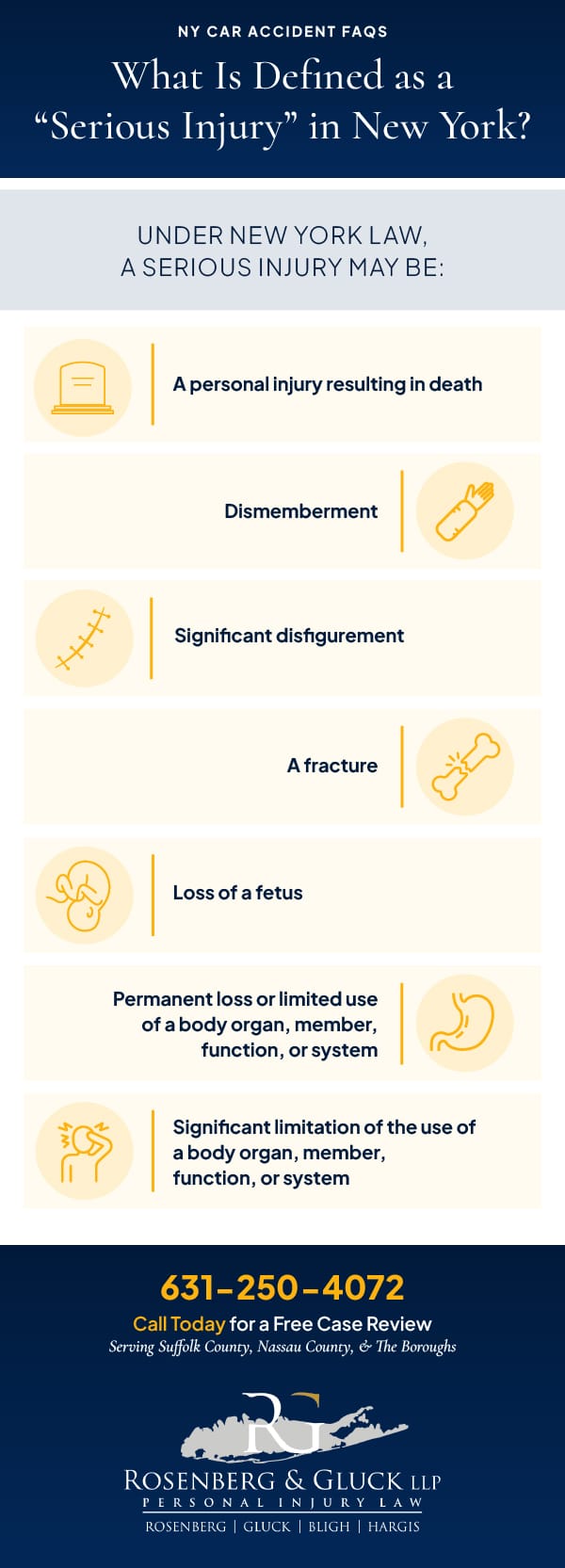
Nassau and Suffolk Counties follow the no-fault car insurance rule, meaning you can recover basic expenses for medical treatment and wages to a certain point. However, if you sustained serious injuries, you may need to file a civil lawsuit against the other driver. Under New York law, a serious injury may be:
- A personal injury which results in death
- Dismemberment
- Significant disfigurement
- A fracture
- The loss of a fetus
- Permanent loss or consequential limitation of the use of a body organ, member, function, or system
- Significant limitation of the use of a body organ, member, function or system
Qualifying injuries entitle you to pursue compensation for all categories of losses, some of which are not available in a claim with your own auto policy. For example:
- Current and ongoing medical bills and rehabilitation costs
- Lost wages and compensation for any impact on future earnings
- Pain and suffering and inconvenience
To find out if your injuries are "serious," we can help. Our lawyers work on a contingency fee basis, so you won't pay upfront legal costs.
Why Are Tickets Delayed?
Tickets may be issued days after an accident for several reasons. Law enforcement officers may need to conduct thorough investigations to determine the cause of the accident and identify any traffic violations that occurred. This process can involve interviewing witnesses, reviewing footage from traffic cameras, and analyzing evidence from the scene, such as skid marks or vehicle damage.
In some cases, officers may need to consult with accident reconstruction specialists to gain a clearer understanding of how the accident unfolded. Additionally, if the accident involved serious injuries or fatalities, the investigation may be more complex and time-consuming, leading to a delay in issuing tickets.
What Types of Tickets Are Issued After an Accident?
The types of tickets issued after a traffic crash can vary depending on the specific traffic violations that occurred. Common examples include:
- Speeding: Drivers exceeding the posted speed limit may get a speeding ticket
- Failing to yield: Not yielding the right of way to another vehicle or pedestrian
- Reckless driving: Operating a vehicle in a dangerous manner (like weaving through traffic)
- Running a red light or stop sign: Disobeying traffic signals or signs
- Distracted driving: Using a phone, eating, or engaging in other distracting activities while driving
What Should I Do After Receiving a Delayed Ticket?
If you receive a ticket days after you've been injured in an accident, you should take the following steps:
- Do not ignore the ticket. Read it carefully to make sure you understand the alleged violation.
- Contact our office for a free consultation with an experienced car accident attorney to discuss the injuries you sustained and whether you can pursue a third-party case.
- Gather any evidence related to the accident, such as photographs, witness statements, or bills for medical care.
- Attend any required court hearings or appearances related to the ticket and follow your attorney's guidance throughout the process.
How Will the Ticket Impact My Insurance Premiums?
New York law regulates how traffic tickets affect insurance premiums. Insurance companies are prohibited from increasing your rates for a single, minor moving violation. An insurer can only implement a surcharge if you are convicted of serious or multiple offenses, such as:
- Speeding more than 15 mph over the limit
- Two or more moving violations within a specific period
- Reckless driving, racing, or fleeing a police officer
- Driving with a suspended license or without a license
- Driving while intoxicated (DWI) or driving while ability impaired (DWAI)
How Much Time Do Law Enforcement Agencies Have to Issue Tickets?
The statute of limitations is the time limit law enforcement has to issue a ticket for a traffic violation after an accident. For standard traffic or speeding violations in New York, this is one year.
How Are Traffic Cameras Used for Delayed Tickets?
Traffic cameras (which monitor traffic) and red light cameras (which issue tickets) play different but significant roles in law enforcement in Nassau and Suffolk Counties. Although Suffolk County ended its red light camera program on December 1, 2024, police can still review traffic camera footage after an accident to identify violations—like running red lights or speeding—and issue tickets days or even weeks later.